
Etsy at a Glance
With Valentine’s Day around the corner, shoppers everywhere are searching for gifts that feel thoughtful, personal, and meaningful. While big-box retailers may offer convenience, few platforms capture the spirit of handcrafted connection quite like Etsy.
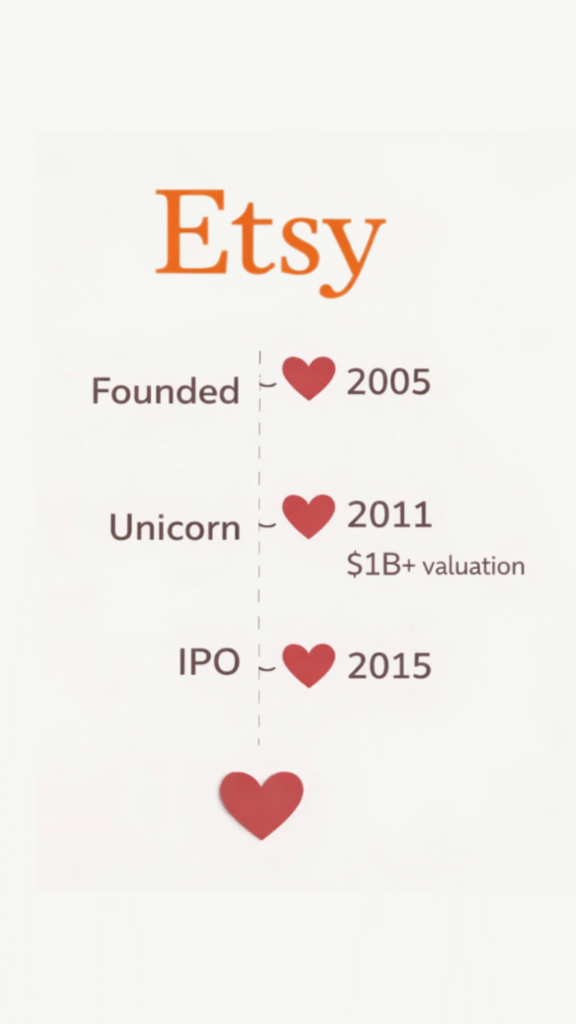
Founded in 2005 in Brooklyn, New York, Etsy was built with a simple but powerful mission: to create a marketplace where independent creators could sell handmade, vintage, and uniquely crafted goods directly to buyers. What began as a niche community of artisans quickly evolved into a global marketplace connecting millions of sellers and shoppers seeking items that carry emotional value.
From custom jewelry and personalized keepsakes to handcrafted candles and home décor, Etsy has become synonymous with heartfelt gifting. Valentine’s Day, in particular, showcases the platform’s strength — a holiday where personalization often matters more than price tag.
The Unicorn Moment
Etsy reached unicorn status in 2011 following a Series F funding round that valued the company at over $1 billion. At the time, the broader e-commerce landscape was dominated by large-scale retailers, yet Etsy carved out a differentiated niche centered on authenticity, creativity, and small-business empowerment.
As consumer preferences shifted toward unique and personalized products, Etsy’s valuation continued to rise. The company successfully balanced growth with community focus, scaling its marketplace while maintaining its brand identity as a home for independent sellers.
Where Etsy Stands Now
Etsy went public in April 2015 under the ticker symbol “ETSY.” Since its IPO, the company has expanded both organically and through strategic acquisitions, including platforms like Reverb and Depop, strengthening its position across multiple creative and resale categories.
Today, Etsy operates as a global marketplace with millions of active buyers and sellers. The company benefits from seasonal spikes in demand — particularly during gift-centric holidays like Valentine’s Day, Mother’s Day, and the winter holidays. Personalized search, seller tools, and data-driven recommendations have helped Etsy remain competitive in a crowded e-commerce environment.
Market Moves Since IPO
Since going public, Etsy has experienced both rapid growth and market volatility. The platform saw a surge during the COVID-19 pandemic as consumers shifted toward online shopping and sought unique goods. While growth normalized post-pandemic, Etsy has maintained strong brand loyalty and continues to generate meaningful gross merchandise sales.
The company’s strength lies in its differentiated value proposition. Unlike mass retailers, Etsy’s marketplace thrives on emotional commerce — products that celebrate milestones, relationships, and individuality. Valentine’s Day serves as a reminder that even in an era of algorithm-driven shopping, consumers still crave authenticity and personal connection.
As shoppers search for gifts that say “I love you” in a way no off-the-shelf product can, Etsy remains a unicorn that turned creativity into a global marketplace.