Robinhood at a Glance
Robinhood is one of the most influential fintech unicorns of the past decade, reshaping how everyday individuals interact with financial markets. Founded in 2013 by Vlad Tenev and Baiju Bhatt, Robinhood set out with a bold mission: to “democratize finance for all.”
At a time when trading stocks often came with high fees and intimidating interfaces, Robinhood introduced a mobile-first platform designed to feel simple, accessible, and modern. By lowering barriers to entry, the company attracted millions of first-time investors, particularly younger users who had previously been underserved by traditional financial institutions.
The Unicorn Moment
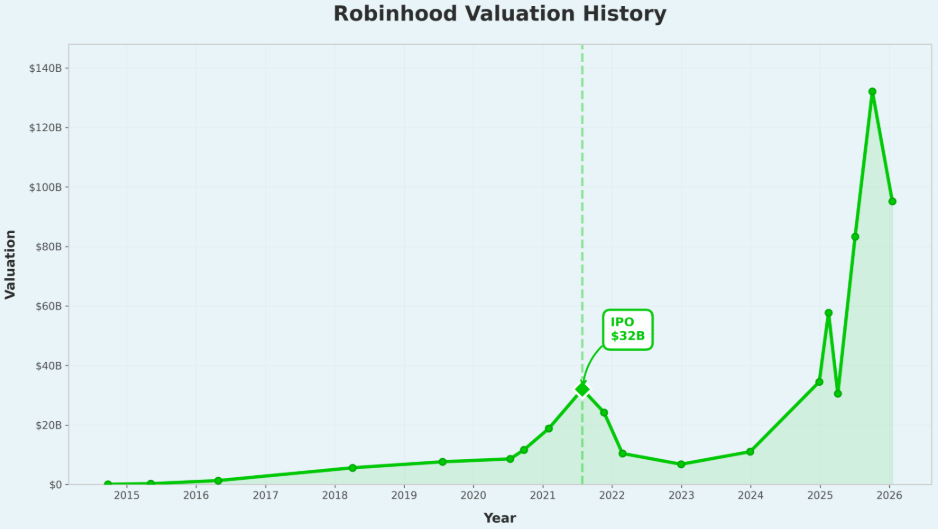
Robinhood reached unicorn status in 2017, following a Series D funding round that valued the company at approximately $1.3 billion. This milestone reflected strong investor confidence in Robinhood’s rapid user growth and its ability to disrupt incumbent brokerage firms.
As commission-free trading gained traction, Robinhood’s valuation accelerated. By 2019, the company was valued at roughly $7.6 billion, and by mid-2020, amid a surge in retail trading activity, it was valued at more than $11 billion. Robinhood’s rise coincided with a broader shift in how individuals participated in financial markets, driven by mobile technology, social media, and increased access to market information.
A Defining Moment for Retail Investing
Robinhood became a household name in early 2021 during a period of unprecedented retail investor activity. The platform sat at the center of a historic trading frenzy involving highly shorted stocks, including GameStop and AMC.
While this moment brought immense attention and rapid user growth, it also placed Robinhood under intense regulatory, political, and public scrutiny. The events highlighted both the power and complexity of democratized investing. Robinhood’s role in these markets sparked widespread debate around market structure, payment for order flow, investor protection, and the responsibilities of fintech platforms operating at scale.
Where Robinhood Stands Now
Robinhood went public in July 2021 under the ticker symbol “HOOD,” debuting at ~$32B valuation. Since then, the company has navigated a challenging macro environment marked by declining retail trading volumes, rising interest rates, and shifting investor sentiment toward growth-oriented fintech firms.
In response, Robinhood has focused on diversifying its revenue streams beyond equity trading. The company has expanded into options, crypto, cash management, and retirement accounts, while also placing greater emphasis on cost discipline and operational efficiency. These efforts reflect a transition from hyper-growth to sustainability, a path many former unicorns face after entering public markets.
Market Performance Since IPO
Since its public debut, Robinhood’s stock performance has been volatile, mirroring broader uncertainty across fintech and consumer-facing technology companies. While trading activity cooled from pandemic-era highs, Robinhood has benefited from higher interest income on customer cash balances and continued growth in assets under custody.
Despite ongoing regulatory oversight and competitive pressure from both traditional brokerages and newer fintech platforms, Robinhood remains a key player in the retail investing ecosystem. Its brand recognition and large user base continue to give it strategic relevance, even as its business model evolves.
A Lasting Unicorn Legacy
Robinhood’s unicorn story is not just about valuation growth, it’s about impact. The company fundamentally changed pricing expectations across the brokerage industry, accelerating the shift toward commission-free trading and mobile-first investing. Whether viewed as a disruptive innovator or a controversial market participant, Robinhood’s influence on modern financial markets is undeniable.
As a former unicorn that reshaped investor behavior and market access, Robinhood serves as a compelling example of how private market innovation can leave a lasting imprint well beyond its IPO.